“Skills flipping” – How to rewrite “negative” traits in a difficult US job market

Adam Stamm
Managing Partner: Online DISC Profile
Adam was first certified in DISC in 2018. Over the years, he has developed new DISC Products and other personality-based tools. He is a Managing Partner at Online DISC Profile, Chapter President of the Association of Talent Development Greater Philadelphia Chapter, and lives in Philadelphia, PA (USA).
Skills-based hiring practices are now commonplace in both the US and the UK, with over 75% of employers using personality and skills tests for hiring in 2025.
Meanwhile, historically slow US hiring rates – stagnating at 3.3% as of June 2026 – indicate that employers are being exceptionally selective when it comes to recruitment. This can be seen in the financial sector particularly, which saw an employment decline of 22,000 jobs in May 2026. Millions of open positions should be good news when paired with an ongoing low rate of unemployment, but AI developments, related cost-cutting measures and additional geopolitical tensions are causing hesitance among hiring managers.
So how can today’s job-seekers command the attention of those managers and teams that are actively recruiting?
We’ve researched the most in-demand skills, and spoken to managers and HR professionals from a range of industries, for insight into how Americans can “skills flip” in a skills-based job market. “Skills flipping” means taking traits and behaviors that are often perceived negatively and flipping them into something that employers want to see.
We also explore how understanding your DISC personality can help you be successful with skills flipping.
What is skills-based hiring?
Skills-based hiring is a type of recruitment that looks at potential candidates based on their ability to demonstrate skills and other traits to perform a job, rather than relying on traditional credentials like formal degrees.
For Jason Rodgers, a content writer at PepThrive involved in hiring for the content team, the biggest benefit to skills-based hiring is the doors it opens to candidates from backgrounds normally overlooked: “Over the course of my career, I’ve watched biology graduates outperform marketing graduates in content roles.
“In our last hiring round at PepThrive, the candidates who passed a written test on an unfamiliar topic (peptide synthesis) were the ones who hit full output in their first three weeks. The ones with stronger resumes took twice as long.”
A rise in skills-based hiring can be partly attributed to technological advancements, as noted by Danielle Balow, Vice President of Customer Transformation at Click Boarding. She says: “AI-powered recruiting tools, assessments, applicant tracking systems, and talent intelligence platforms have made it easier than ever for employers to identify, measure, and compare skills at scale.”
In effect, job seekers must now rebrand their soft skills and even personality traits as workforce skills in order to make the cut in a modern hiring system.
Soft skills vs hard skills
Workforce skills can be split into “hard” skills and “soft” skills. Examples include:
| Hard Skills | Soft Skills |
|---|---|
|
Software and IT |
Communication |
|
UX/UI design |
Customer service |
|
Heavy machinery operation |
Emotional intelligence |
|
Trade, such as plumbing |
Strong work ethic |
Both are just as important for securing job roles.
“Hard skills get the job done, but soft skills show how someone works with others and handles challenges. Teams fail or succeed based on how people collaborate, not just what they know.”
Meenal Patel, HR/Finance Administrator at Sociallyin
The top soft skills employers are looking for
The Department of Labor notes that employers view “soft” skills as even more important to work readiness than fundamental abilities like reading, writing, and arithmetic.
We spoke to career experts and sought first-hand perspectives from industry insiders to identify the key soft skills in demand right now.
Powerful communication
At Online DISC Profile, we’ve seen a 300% YOY increase (2026) in the number of people looking to improve their workplace communication skills. With the Department of Labor consistently highlighting this as an in-demand, and Oxford-trained career experts reminding us that communication is an AI-proof talent, job seekers should dedicate time to ensuring they know how to communicate in a way that is compelling, persuasive, and authentic.
“Every organization needs skilled communicators to explain their mission and offerings, both internally and externally.”
Benjamin Todd, founder of 80,000 Hours
Data from Ahrefs, a marketing tool that analyzes internet search data, shows that as of June 2026, around 23,000 people globally are searching for “How to improve communication skills”, and 14,000 people for “Effective communication skills”.

Charismatic people skills
In a world of AI innovation and automation, the things that make us uniquely human have never been more important.
While the Department of Labor highlights “teamwork and collaboration skills” as important focus areas, crowd-sourced insights (example) show us that job seekers who are charismatic, with engaging public speaking skills and a diplomatic nature, will progress more easily than those whose ‘people skills’ are limited to handling straightforward conversations.
“The most effective interviewees know how to engage their interviewer with candid, stimulating conversation, drawing them into their way of thinking through their charisma and confidence. More precisely, charismatic interviewees can persuade their interviewer to open up to them by coming across as authentic, knowledgeable, and attuned to their interviewer’s and employer’s needs.”
The Art of Finding Work
Accountable, problem-solving leadership
Research from the New Mexico State University notes that “leadership now shows up well before formal job titles”, highlighting it in their own list of the most in-demand skills.
We know that there’s no one style of leadership – but there are universal factors that demonstrate you are not only a good leader, but a great one. According to experts, accountability is a critical offering.
“Without accountability from senior leadership and middle management, it’s easy for employees to feel lost and rudderless. Team members need to know that leaders can be trusted to do what they say they’re going to do, and reliably deliver on their commitments. Accountable leaders are able to make difficult decisions with confidence and conviction, knowing that the buck stops with them either way. Ultimately, accountability builds trust and respect, and when embedded into leadership behavior, allows team members to feel confident their leader will make the right call at the right time.”
GRG Executive Search
Taking initiative, showing good judgment and ensuring practical, effective decision-making are all other important leadership skills found in our research.
True attention to detail
Understandably, attention to detail is referenced frequently not only by hiring managers we’ve spoken to but also across online job listings from a broad range of industries.
Whether you’re applying for office-based jobs or roles in a warehouse environment, attention to detail and “excellent follow-through” (the ability to act on instructions from start to finish) are almost universally considered as required skills.
Ryan Woodward, CEO of National Technical Institute, a trade school, and former member of the Governor’s Workforce Development Board, notes that alongside problem-solving and communication, “Reliability and attention to detail also matter universally.”
Demonstrating attention to detail in your applications isn’t just about avoiding typos in your resume. Refer to the company values found on-site for the hiring organization, research the business’s history, and gather any publicly available insights into their future plans. To gain an edge when it comes to securing an interview, show potential employers that you’re paying attention to the finer details of what they’re about – as well as demonstrating fastidious attention to detail in your own work.
Strong work ethic
The Department of Labor lists this as the top skill which is most important for job seekers today. Both professionalism and a “strong work ethic” are stated as very important for work readiness.
It notes that “business etiquette and work ethic go hand in hand” for employers, listing some tips for making a good impression:
- Dressing properly for the work setting
- Arriving on time and staying productive until you leave
- Putting your phone on silent while at work and returning phone calls and text messages while on breaks or after work hours
- Using computers, if you have access to them, only for work-related tasks
- Speaking in a respectful manner with supervisors, peers, and customers or clients
A Reddit post asking for advice on what skills are needed to get a job received many responses from people highlighting the importance of a strong work ethic, with one person noting attendance as an important part of this, saying: “If you’re on time and don’t call out a lot, you’ve already checked the biggest box they expect.”
“Across industries, the strongest candidates usually show communication, accountability, problem solving, time management, and adaptability too, since those traits shape collaboration quality no matter what the technical specialty is.”
Tim Haider, CEO of Remote Job Assistant
How job-seekers can “flip skills” to meet employer needs

With a daunting amount of both soft and hard skills in demand, some job seekers might be questioning how to go about developing or demonstrating those seen as most critical to their success.
One breakout tactic we see is “skills flipping”. That is, taking existing traits and behaviors that could be seen as negative, and ‘flipping’ them to meet employer needs.
“The idea of ‘skills flipping’ isn’t necessarily about changing who you are. It’s about learning how to market your strengths in a way that connects to the needs of an employer.” – Danielle Balow, Click Boarding
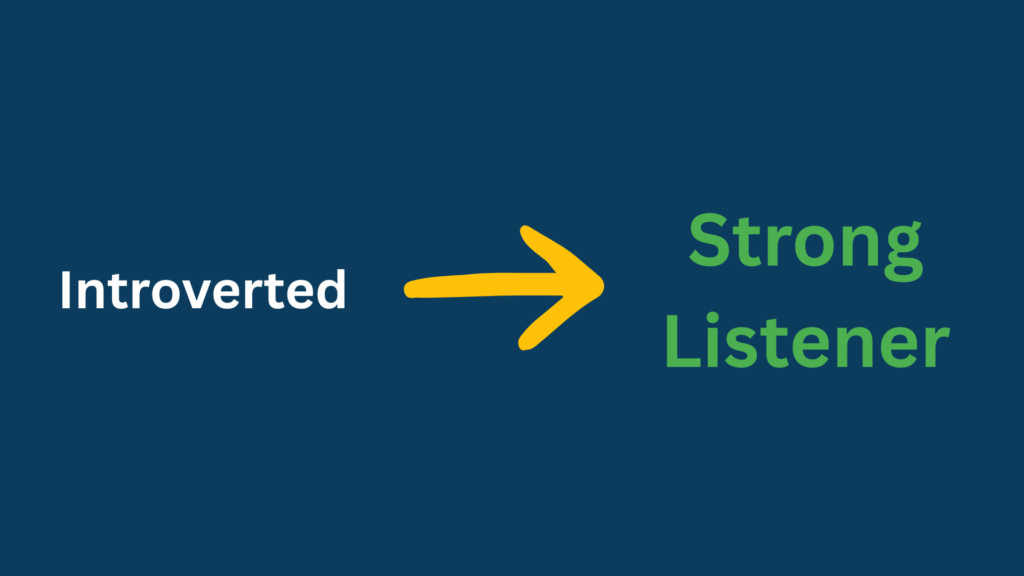
Introvert → Strong listener
| How this may present | How to skill flip |
|---|---|
|
Quiet or withdrawn |
Observing, attentive listening |
|
Preference for smaller groups and solo tasks |
Strong independent working and self-management |
|
Not visibly “high energy” |
Calm and steady presence during pressure and change |
“If someone has introverted tendencies, where they might not talk or participate often, this can be framed as being an observant, attentive listener.” Says Kristin Emerson, Director of Training at Online Disc Profile.
“They are likely to excel at gathering information, building trust, and understanding customer or client needs before responding. Additionally, introverts may be better at independent working than extroverted colleagues, due to their natural preference for solo or small group working.”
Danielle Balow notes: “Someone who describes themselves as cautious or introverted may be highlighting the attention to detail and consistency required for compliance, quality assurance, finance, or operations roles.”
Rather than highlighting a preference for solo work, which could make employers feel you’re not a team player, focus on the fact that independent work is a strength – and that it demonstrates a higher degree of self-management than working well only in team environments.
Anxious → Detail-oriented
| How this may present | How to skill flip |
|---|---|
|
Worrying about getting things wrong |
High sense of responsibility and accountability, caring deeply about work quality and impact |
|
Asking for a lot of clarification or reassurance |
Detail-oriented communication, checking understanding to avoid error and improve efficiency |
|
Anticipating worst-case scenarios |
Strong risk radar: a colleague who can highlight vulnerabilities and produce contingency plans |
“Some people who experience anxiety find that it corresponds with over-planning, planning ahead, and pre-empting scenarios, leading to a lot of consideration for detail.” Kristin Emerson goes on to say. “That can mean that people experiencing anxiety may feel determined to be more accurate and precise, and often analytical, which is common in those who identify as the DISC C-style.”
Try to avoid exhibiting a high demand for reassurance if invited to interview, but don’t be afraid to ask for clarification on important points in a way that actively demonstrates a keenness for detail and accuracy.
Juggling many commitments → Time management
| How this may present | How to skill flip |
|---|---|
|
Limited working availability cited in applications |
Highlight aptitude for balancing a busy ‘workload’ with varied responsibilities |
|
Transparent mentions of responsibilities in cover letters or resumes |
Focus on resilience and time management skills |
“Applicants seeking part-time roles and citing limited days and times that they’re available can feel that they’re at an immediate disadvantage against those with greater flexibility.” Says Tabby Farrar, Head of Search and hiring manager at Candour. “But someone who can balance multiple jobs, or who has caregiving responsibilities and passion projects outside of their career, will often have developed time management skills and a genuine resilience that someone with no other demands on their time can’t match.”
Take care not to give the impression that you’re prioritizing the wrong things, however. Highlighting your success so far in managing multiple roles or projects can show great time management, but telling a prospective employer that you’re prioritizing a hobby over a career would indicate that you aren’t entirely serious about the role at hand.
Talkative → People skills/communication
| How this may present | How to skill flip |
|---|---|
|
Can be seen as not listening enough or dominating meetings |
Confident contributor: gets discussions started and helps to maintain energy |
|
Tendency to go off-topic |
Creative idea-generator |
|
Over-sharing |
Helps showcase vulnerability, bringing warmth that promotes team-building. |
“If someone is generally very enthusiastic, optimistic, and sociable, left unrecognized or unmanaged, this could cause them to be easily distracted and fail to follow directions. But with some self-awareness, they can push these negative labels and showcase how their ability to connect with others equals great people skills.” Says Kristin Emerson.
“The presence of extroverted and more talkative individuals on a team can also be a boost for employers who already have a number of introverts in their midst.” Tabby goes on to say. “High-performing teams are those that are well-balanced in terms of their personality types, and a talkative teammate will naturally help to get discussions started, keep them moving, and encourage introverts to join the conversation.”
Overbearing → Strong work ethic
| How this may present | How to skill flip |
|---|---|
|
A ‘control freak’ who needs to be in charge |
Decisive organizer who provides structure and clarity |
|
Potential micromanaging or lack of delegation |
Deeply accountable, invested in getting the best outcomes |
|
Intense or intimidating personality style |
Highly driven and committed individual who is keen to hone pacing skills as part of professional development |
Being seen as overbearing is a trait particularly common in those with D-Type personalities – often accused of being too direct or too focused on results.
Though it’s not an attribute any of us would typically choose to self-describe, if a job-seeker is aware that people have found them overbearing in the past – or if they’ve been accused of micromanagement – there are options for reframing it in a more positive light.
“Someone who is seen as overbearing may offer an unmatched work ethic,” Kristin Emerson notes. “While they should take care not to come across as overly intense in an interview situation, common interview questions such as ‘What’s an area you know you need to develop’ or ‘What’s your biggest weakness’ can easily be answered with honesty. For example, highlighting that a strong drive to get the best results means the candidate needs to develop their delegation skills.
“Candidates should avoid admitting that they may be a ‘control freak’, instead focusing on their natural aptitude for organization and project management.”
Identifying skills with DISC
With skills-based hiring on the rise, hiring managers and business leaders alike are identifying some of the most important skills for the working world today, such as great communication, excellent people skills, and a strong work ethic.
To help move a resume to the top of the list, prospective employees can start by using DISC for free to identify their strong skills, then look to “skills flipping” to learn how to repackage any traits that may be perceived as negative.
Skills flipping not only arms candidates with a new list of qualities for their resume, but can also lead to overall confidence in interviews, after identifying the workplace benefits of so-called “weaknesses”.
Skills such as communication and leadership can also be improved through DISC, the training for which can be completed at home by anyone.
At Online DISC Profile, we also offer a range of team assessment options for the workplace, helping managers develop their understanding of their team’s skills and those of prospective hires, including potentially hidden ones.
Footnotes:
- Google Analytics data, Jan-May 2025 vs Jan-May 2026