
DISC Facilitator Hub
DISC Facilitator Resources
Whether you are new to DISC or have run many workshops, this resource hub helps facilitators hone their ability to teach soft skills such as leadership, communication, and emotional intelligence.
We’ve used these tools since 1986. Over that time, we’ve helped many individuals develop greater self-awareness. We’ve helped facilitators and learning professionals measure the impact of their work to showcase real business outcomes and KPIs.
In this hub, we share those experiences and more from our 40 years of experience in using these tools.
Our guides and articles are curated to help DISC practitioners use DISC more effectively. We explore topics such as the right way to use DISC, using DISC in coaching, and supplemental tools that will support your work with DISC.
In this section, we dig into the DISC tools and how they can support your work in leadership development, organizational development, and more. This section gives you key steps you can take right now to start using DISC as a tool for organizational, leadership, and team development.
Are you curious to learn more about how DISC compares with other corporate assessments or DISC research? This section is filled with useful articles to expand your knowledge of DISC.
We answer many questions about DISC, how to use it, and how to get started. We’ve organized the most frequent questions we received into a single list to help facilitators get immediate answers to their questions
Tip: Facilitators who are certified in DISC report feeling more confident in running effective workshops. Explore DISC Certification.
Guides and articles for DISC Practitioners
Succesfully implementing DISC assessments in an organization supports leadership development, self-awareness, psychological safety, and more.
However, if DISC isn’t integrated as a common language, or worse, if DISC is used inappropriately, it can cause workplace issues. We’ve created a series of articles that ensure you are able to succesfully integrate DISC as a language that promotes easier recognition of needs and stressors without pigeonholing or limiting a person’s capabilities.
DISC Assessment Training Guide
Unsure where to start in using DISC? This is your guide! Learn about what happens in a DISC workshop, pricing considerations, and whether DISC Certification is worth the investment.
DISC Interpretation Dos and Don'ts
DISC offers valuable insights, but there are limitations to the model. This article provides guidance on using DISC correctly.
DISC Interpretation Dos and Don'ts
DISC offers valuable insights, but there are limitations to the model. This article provides guidance on using DISC correctly.
DISC Products and Tools
While DISC is a single product, it has different applications to achieve different organizational or team development goals. This section is designed to help you take a first step towards using DISC.
Free DISC Profile
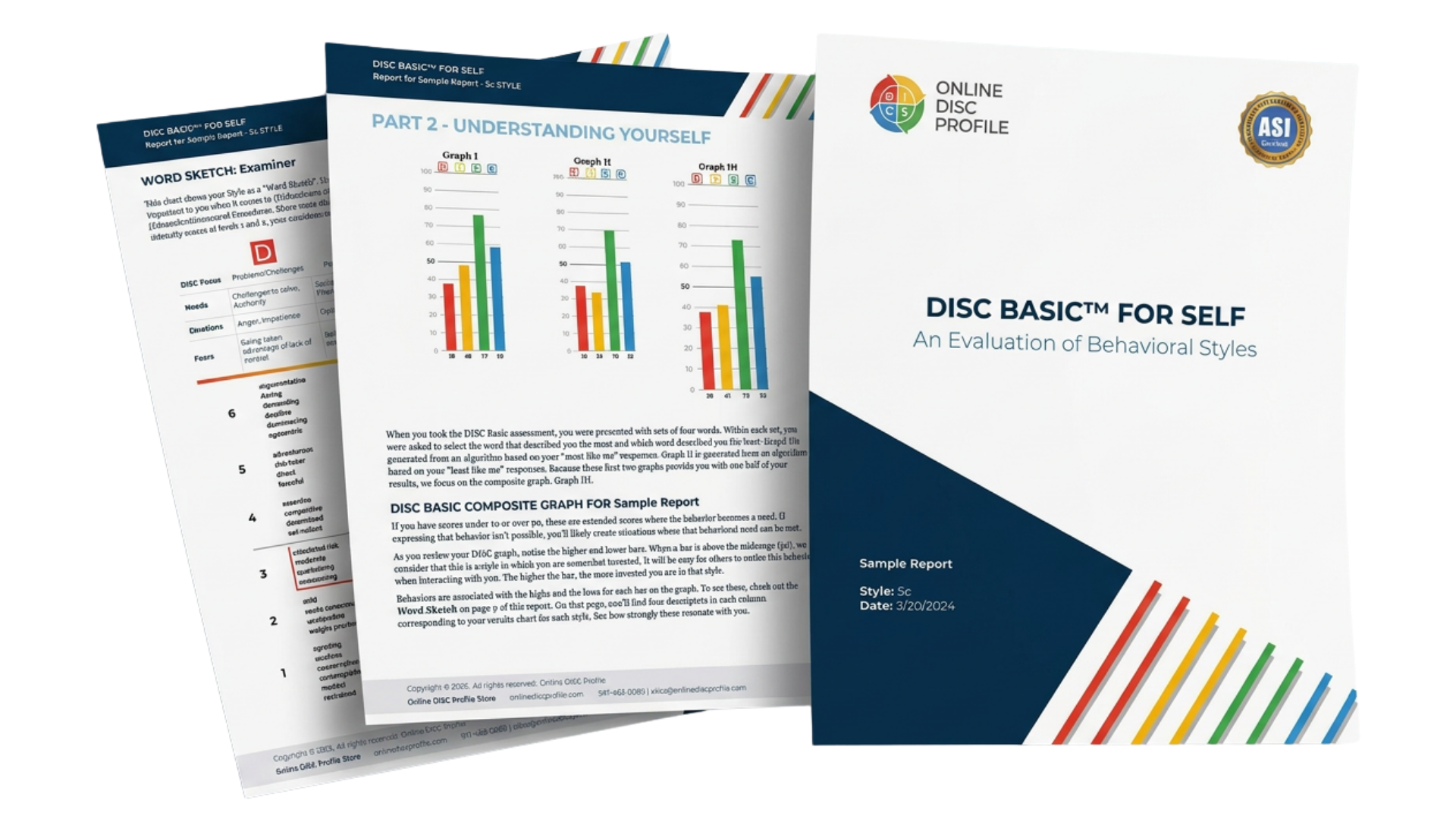
Our free DISC profile is the perfect place to start to understand how DISC works. You will have the ability to upgrade your free assessment to the full DISC profile. You will learn your DISC Style and also receive access to a short email learning series to expand your knowledge of DISC.
This option is perfect for anyone who has a limited or no experience with DISC!
Going further with DISC
DISC products support leadership development, manager & supervisor development, team building, and more.
Use this list to navigate the potential DISC products you can use:

Schedule a DISC Workshop!
Bring the DISC model to life with a virtual or in-person DISC workshop. Our DISC training programs are designed to help increase collaboration, self-awareness, and inter-personal connection.
Explore our DISC corporate training programs today!
More DISC Resources
We’ve worked with the DISC model since 1986. Over the past 40+ years, we’ve written a lot about the subject. Below are guides and articles that will expand your knowledge of DISC and how it compares to other tools.
Do DISC Results change over time?
Read the research behind this important question!
How to give feedback to different personality types.
Read how DISC can help the feedback process.
DISC Research
For decades, researchers have studied DISC as a psychometric tool. Learn more about the validation process and why DISC is a stable tool for the workplace.
DISC Leadership Styles
DISC plays a key role in developing leaders. Learn how it works in this application.
How does DISC compare to Myers-Briggs?
Myers-Briggs is one of the most popular corporate assessments. See how DISC compares to MBTI.
Frequently Asked Questions
We get a lot of questions about DISC. We’ve created a list of common questions from new facilitators who want to use DISC to help answer questions you might have about this tool.
DISC measures two dimensions that show up in how you behave:
- Pace: Do you prefer to work assertively, taking risks, and making bold decisions? Or do you prefer to make more thoughtful and risk-averse decisions?
- Trust & Focus: Do you prefer to lean on your logic-based reasoning and question what you hear so you can understand all of the facts? Or are you more open to collaboration and receptive to what others think and believe?
These two dimensions combine to create the four primary DISC personality types (Dominance (D-Personality Type), Influence (I-Personality Type), Steadiness (S-Personality Type), Conscientiousness (C-Personality Type).
When you compare DISC to a tool like Myers-Briggs, you will find that they overlap in measuring Extroversion and Introversion (E/I scales) and the Thinking and Feeling (T/F scales).
DISC measures specific behavioral characteristics that are commonly associated with personality. DISC helps us understand interpersonal relationships and communication differences because it measures our preferred actions (pace) and focus (task vs. people).
When using DISC, it’s important to set ground rules to ensure it’s used correctly across the team. Here are a few you can use during your own workshops:
- Don’t pigeonhole someone – we are all more than our DISC style.
- Use DISC with someone, not ‘on’ someone.
- Allow DISC to open conversations, not label someone without a discussion.
By setting simple ground rules, you can ensure that the tool doesn’t hurt team psychological safety.
Yes. DISC has gone through multiple 10,000-participant research studies to determine the assessment’s reliability and validity.
DISC has also conducted disparate impact studies and meets EEOC criteria for use in the hiring process.
DISC assessment measurements are fairly stable over time. We’ve seen major changes in a person’s DISC profile when they go through a major life change, like starting a family or experiencing trauma. We don’t recommend taking DISC regularly because the results likely won’t change.
We have found that the main pushback against this tool stems from a misunderstanding of how it will be used.
DISC may be perceived as a tool that could prevent someone from getting a promotion or a financial incentive if they don’t have a particular style.
Before you launch the assessment process, be clear in your communication about why you are inviting them to take the assessment and participate in a workshop.
Share your goals for what you hope they will learn.
We have found that when communication is done well before the process begins, there is almost no pushback.
DISC integrates well into broad professional development programs. We have found that it can become a thread that ties multiple legs of a larger learning journey together. By starting with DISC, you can carry the concepts of becoming a more effective communicator into topics like leadership development, management, or sales.
Take a topic like providing feedback. Many training programs will instruct you to focus on observed behaviors when giving feedback – which is appropriate to teach! However, with DISC, you can add nuance to this instruction. The manager can learn to be more direct or less direct depending on the DISC style. They will know whether to give public praise or have a 1:1 conversation.