
Understanding the ‘Dominance’ DISC type

Kristin Emerson
Training Director
Kristin worked as a professor at NC State prior to working in Talent Development. Since leaving the world of academia, Kristin has worked with organizations both large and small helping to improve team culture, emotional intelligence, and leadership development.
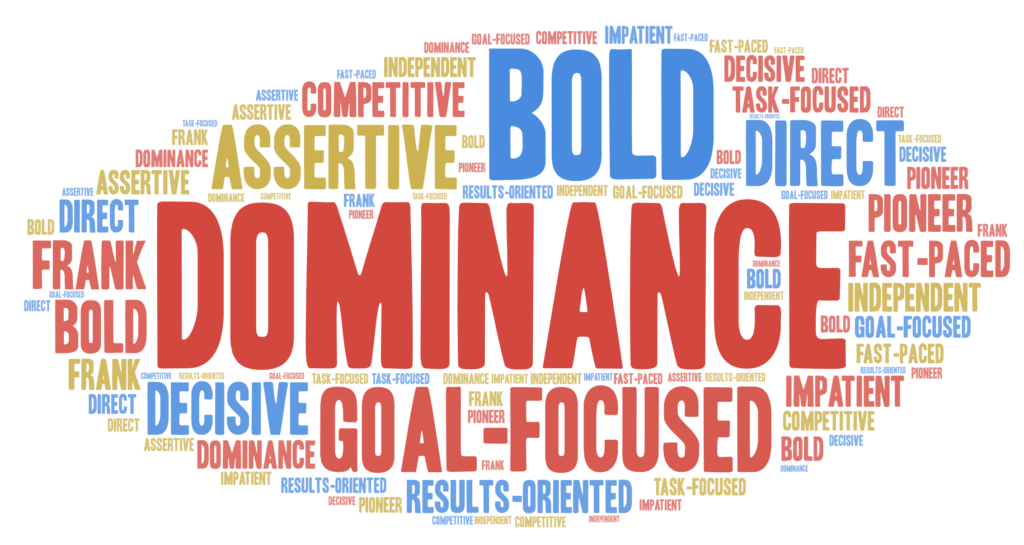
The Dominance or D style is one of the four primary DISC personality types.
As a certified DISC coach and trainer, I have worked with many people who primarily use the D style, helping them leverage their strengths and identify areas for improvement.
This article takes a focused look at what drives individuals with the D style, how they communicate, where they excel, what may challenge them, and how to support their growth at work.
Need a broader overview of DISC? Learn more about the main DISC personality styles.
The 'D'-type personality explained
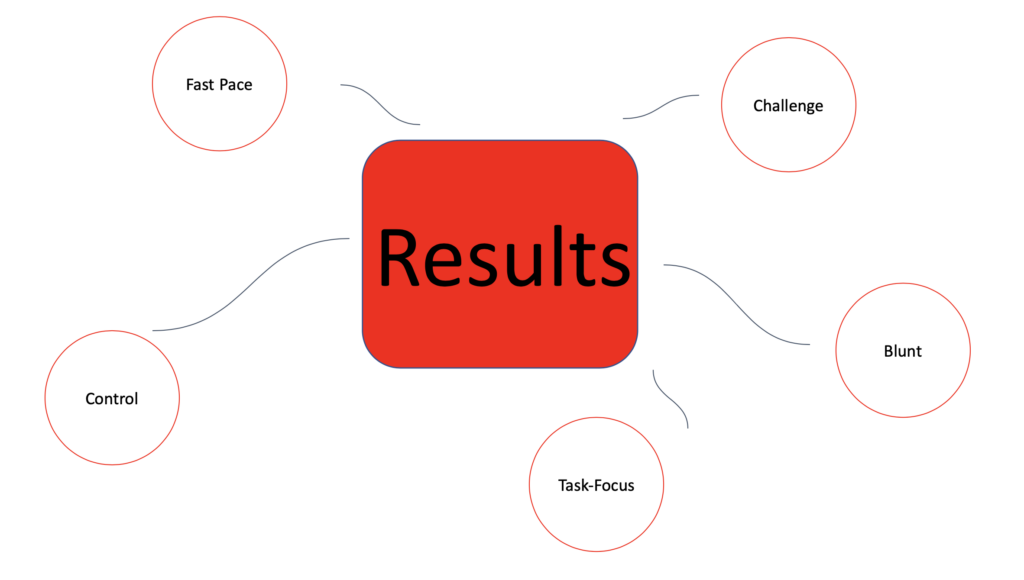
People with a type D personality are driven by their need for results. This need is psychological, and it is a driver for other behaviors that are commonly associated with their personality type.
- Type D people love to feel like they’re achieving their goals. As a result, they tend to be highly competitive, and they won’t back down from a challenge. They might take on authority, believing their way is better than what’s currently in place. Their skepticism is a vehicle for ensuring that outside ideas will help them accomplish their goals and tasks.
- With an eye toward the finish line, the type D personality prefers to think about the bottom-line results rather than the small details needed to achieve the end goal. This leads them to look outside the box and think about the bigger picture.
- The Dominance style is motivated by winning, independence, competition, and efficiency. They prefer a fast pace, clear authority, and the freedom to make their own decisions.
- D types often step into leadership and problem-solving roles without hesitation. It’s not that they are better leaders – all styles can be effective leaders – but those who operate from the D style tend to seek leadership roles more often. Those roles serve their need to make their own decisions, focus on results, and take charge.
Common characteristics
- Confident and assertive
- Goal-oriented and driven
- Comfortable taking risks
- Decisive under pressure
Famous D-personality individuals
Many well-known leaders, innovators, and competitors have this particular personality style. For the D-Personality, traits that could be seen as “blunt” are often the core of their achievements. For example, Aaron Rodgers and Simon Cowell both appear to have a D-personality style.
Below are a few more examples of some famous D-Style individuals.
Steve Jobs
Steve Jobs’ reputation for being uncompromising and accepting nothing less than perfection was driven by the D-style need to shape the environment to match their internal vision. He was a master of “big picture” thinking, leaving the technical execution to his team while he drove the strategy.
Gordon Ramsay
Gordon Ramsay is famous for his no-nonsense approach in the kitchen. While his communication style is often explosive and blunt, it is driven by an uncompromising demand for excellence and efficiency. He does not sugarcoat his feedback because his primary goal is to fix the problem and achieve the highest standard immediately.
Michael Jordan
Michael Jordan exemplifies the hyper-competitive nature of the High D. Known for his work ethic, he demanded the absolute best from himself and his teammates. His drive to overcome challenges and dominate the competition often made him seem intimidating, but it was this singular focus that made him a legend.
What is a 'High-D’ DISC profile?
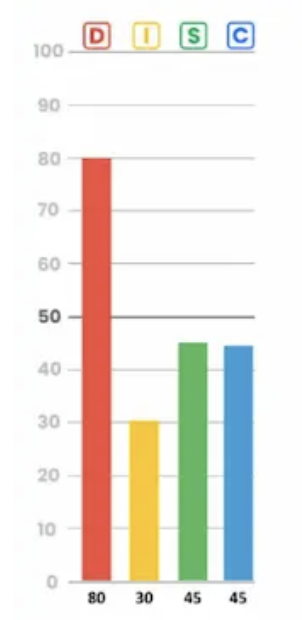
The term ‘High D’ indicates that an individual is strongly aligned with the Dominant personality type – someone whose drive for results and control stands out as their most prominent behavioral trait.
The name stems from the DISC graph’s visual representation. If a person’s score in the dominance category spikes well above the other styles, they are considered a “High D.”
Other D-personality types terms
There are a few other phrases that could describe the D-Personality Type.
- DISC Colors – Red The DISC Colors are sometimes referenced instead of using the letters. If someone says they are a ‘Red Profile,’ they have a D-Personality Type.
- DISC Birds – Eagle The DISC Birds profile uses images of birds to showcase the DISC styles. If you have an Eagle Style, you are also a D-Personality Type.
D Personality Type Strengths
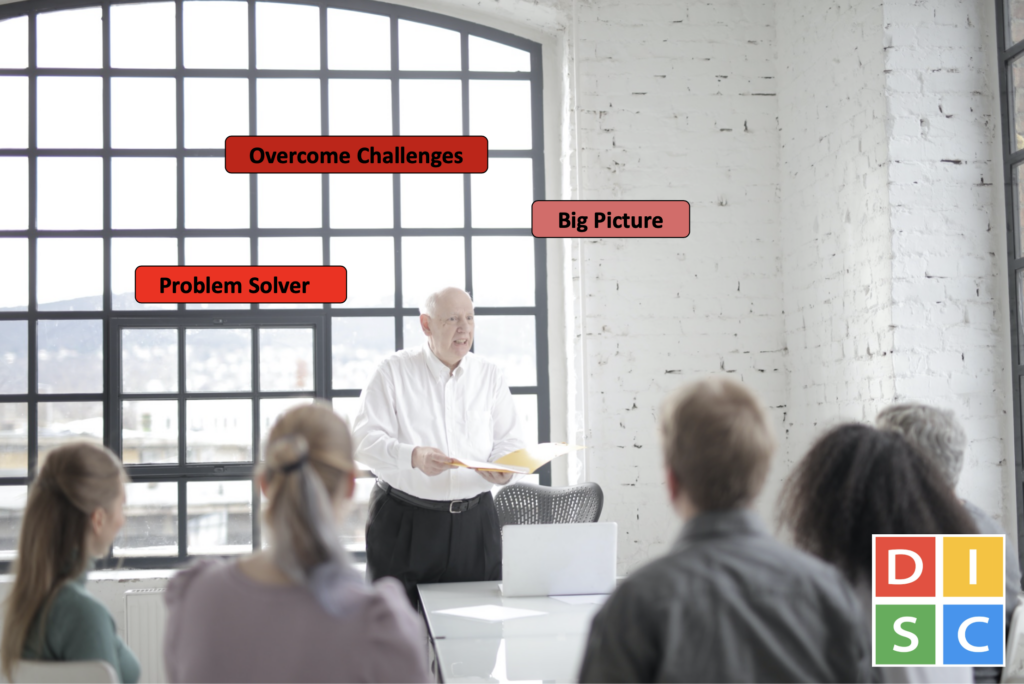
People with a type D personality are quick to act and get to the bottom of any problem. Like other personality types, they have many valuable strengths, helping teams and organizations grow, adapt, and compete.
- Take initiative
For a Type D personality, waiting for permission is synonymous with wasting time. While others may be stuck in the planning phase or paralyzed by potential risks, the Type D individual is already executing the first step.
- Comfortable with difficult decisions
They remain steady in moments of uncertainty. When making difficult decisions, such as budget cuts, pivoting strategy, or personnel changes, they can separate emotional sentiment from the logical requirements of the situation.
- Push for improvement
They are disruptors by nature. They are not afraid to dismantle a legacy system if they believe a new method will bring improvements. Even after a major success, they will immediately look for what could have been optimized.
- Strategic problem solvers
These individuals are conceptual, big-picture thinkers who see the forest rather than the trees. When faced with a challenge, they work best independently, often tuning out distractions to tease out a solution or build a strategy in their mind.
Once they have the vision, they turn to the team to delegate the execution. They function as the architects of a solution, relying on others to draw the specific details.
- Striving for the best
They are highly competitive because they want the best for themselves and those around them. They value measurable results and hold everyone to a high standard.
Someone with a Type D personality can shape their environment to overcome anything that gets in the way of winning. Because of this, someone with a type D personality may often initiate changes in the hopes of doing better.
D Personality Type and Areas for Growth
Everyone has areas of personal growth, and the type D personality is no exception.
- Impatience with others
Because Type D personalities want to control the environment, they can get easily impatient and frustrated at those around them who don’t “get with the program.” With a keen eye toward the bottom line, they can lack empathy for those whom they view as not performing effectively.
- Venting under pressure
When faced with pressure, people with a type D personality style can vent their frustrations outward to others. They respond to any tense situation with a fight response that can be off-putting and intimidating to others. What is simply a stress-relieving practice for the type D personality can easily be misunderstood by others as anger.
- Direct communication can feel blunt
These individuals prioritize efficiency and truth over social niceties, resulting in a communication style that can feel abrupt. While they intend to be clear, strong opinions can easily overwhelm more reserved personality types.
- May struggle with delegation
Although they are natural leaders, D types often hoard tasks because they believe they can execute them faster and better than anyone else. The desire for total control and immediate results makes handing over the reins difficult. They may micromanage or refuse to delegate, fearing that a loss of direct oversight will compromise quality.
- Can overlook emotional impact
Driven by logic and metrics, the Type D personality often views emotions as distractions from the goal. They tend to prioritize the “what” over the “who”.
D-Personality Style Story
Our organization employs people with each personality style. In this clip, Susan Stamm shares how her D-Style shows up in her life.
Understand those with the 'D' personality type
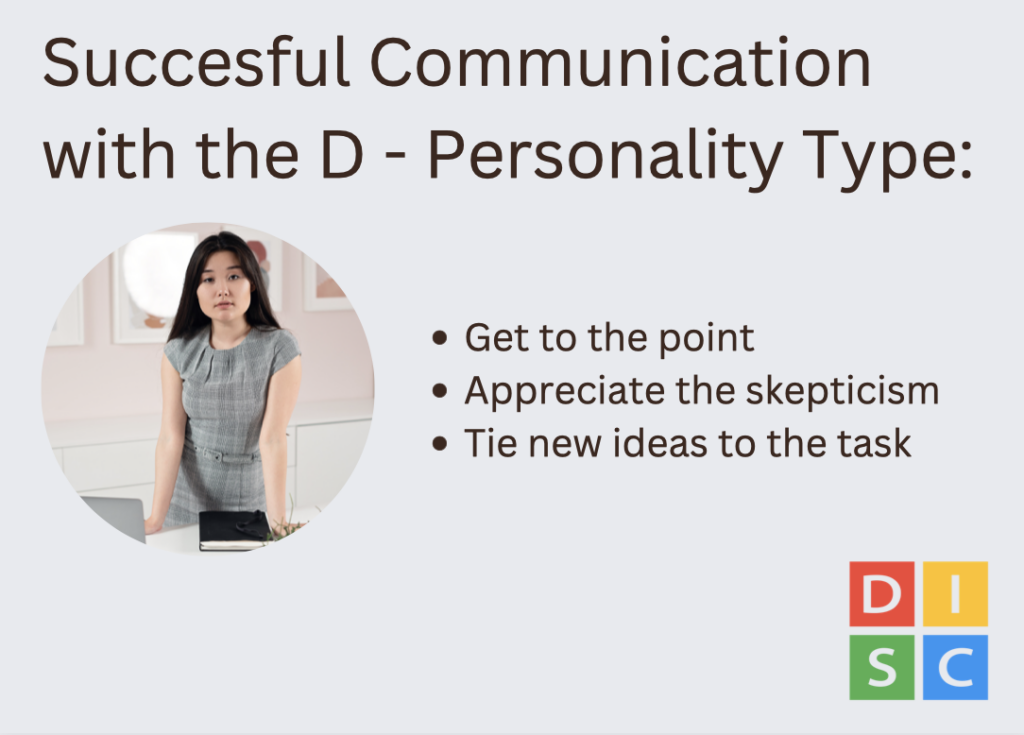
People with the D Personality Type can tend to dominate a conversation. They usually engage in communication that has one direction – they talk and expect others to listen.
It’s important to note that someone with this personality type can quickly present opinions and guesses as facts due to their confidence and generalizing tendencies.
When communicating with the type D personality:
- Provide concise and big-picture data.
- Show them potential for new opportunities or ways to “win”, and complement their accomplishments.
- Let them take the lead where appropriate and work together to agree on what success looks like.
- Avoid unnecessary detail or repetition.
For deeper guidance, check out our guide to improving communication using DISC styles.
D-type compatibility with other DISC styles
- D + D (Power struggle): Two captains on one ship. This pairing is explosive and highly productive if goals are aligned, but can quickly collapse if boundaries aren’t set.
- D + I (Fast and energetic): Both move at lightning speed. The D drives the results while the I-type manages the morale. The risk is that with so much action, details and organization may fall through the cracks.
- D + S (Pace and friction): The most challenging dynamic. The D’s aggressive pace often overwhelms the steady, security-seeking S. The D must learn patience, while the S type must learn to speak up.
- D + C (Vision vs. precision): Both are task-oriented but operate on different timelines. The D wants it done, and the C-type wants it perfect. They complement each other well if they can agree on the balance between speed and accuracy.
For workplace pairing insights, read our guide: Use DISC to Get the Best Workplace Personality Pairings.
Considerations when working with a 'D' style
To get the most out of a Type D professional, it is crucial to place them in an ecosystem where their natural drive is an asset rather than a source of conflict. Understanding their preferred environment and development needs allows organizations to harness their power effectively.
Professionals with the D style thrive in environments that offer:
- Autonomy and decision making
- Stretch goals and competition
- Leadership responsibility
- Visible impact on results
Effective development strategies include:
- Coaching on empathy and patience
- Active listening practice
- Feedback delivery and diplomacy
- Collaborative team leadership
Coaching the Type D Personality
When coaching a client with a primary D style, it is important to have a structured plan for each session that results in specific next steps. If the discussion felt too theoretical and there were no actionable conclusions, they may view the session as a waste of time. Instead, ensure they leave with a set of steps to promote clearer, more receptive, and more frequent communication with their teams.
As a coach, you should prepare yourself not to take the D-style client’s directness or bluntness personally; instead, be ready to use a direct approach yourself when needed.
Dominance subtypes
Not all D styles behave the same way. Many people blend Dominance with a secondary DISC style. Understanding these combinations provides further insight into colleagues’ behavior.
DI (Dominance-Influence)
Energetic, bold, optimistic, and influential. These individuals bring enthusiasm to ambitious goals and thrive in fast, collaborative environments. They are often drawn to sales, innovation, and visionary roles.
DS (Dominance-Steadiness)
Direct but steadier and more supportive. They strike a balance between determination, patience, and loyalty. They often lead by example and value long-term stability. They are frequently attracted to operations, project management, or service-based leadership.
DC (Dominance-Concientiousness)
Strong-willed, analytical, and quality-focused. They combine drive with logic and accuracy. They challenge assumptions, push for improvement, and often choose technical, financial, or strategic problem-solving roles.
Next Steps: Discover Your DISC Style
Understanding your DISC profile can improve self-awareness, communication, and team performance.
If you would like to explore your DISC style or introduce DISC to your organization, consider taking a DISC assessment or contacting us to schedule a consultation.