
The Johari Window Model Explained

Adam Stamm
Managing Partner: Online DISC Profile
Adam was first certified in DISC in 2018. Over the years, he has developed new DISC Products and other personality-based tools. He is a Managing Partner at Online DISC Profile, Chapter President of the Association of Talent Development Greater Philadelphia Chapter, and lives in Philadelphia, PA (USA).
Relationship issues are notoriously tricky to navigate. The Johari Window provides a framework for making sense of our relationships. By going through each of the ‘panes’ in the Johari Window, you will have a clearer understanding of your perceptions of someone and areas of growth and opportunity for the relationship.
Every day, our communication is shaped by our relationships. Situations like asking for a promotion, selling a tool or a product, or asking someone on a date are influenced by what we perceive about the other person.
The Johari Window can help us make sense of our perceptions, uncover why our communication backfired, or understand issues within a relationship.
We have used the Johari Window in conjunction with another model, DISC, to help resolve interpersonal issues and explore communication gaps. We have seen these tools used together to help solve the following types of problems:
- Manager / Employee relationships & misunderstandings
- Conflict between co-workers
- Improve empathy
- Increase self-awareness
This article will share our experiences in using both models effectively to promote healthy feedback and self-disclosure.
Johari Window Explained
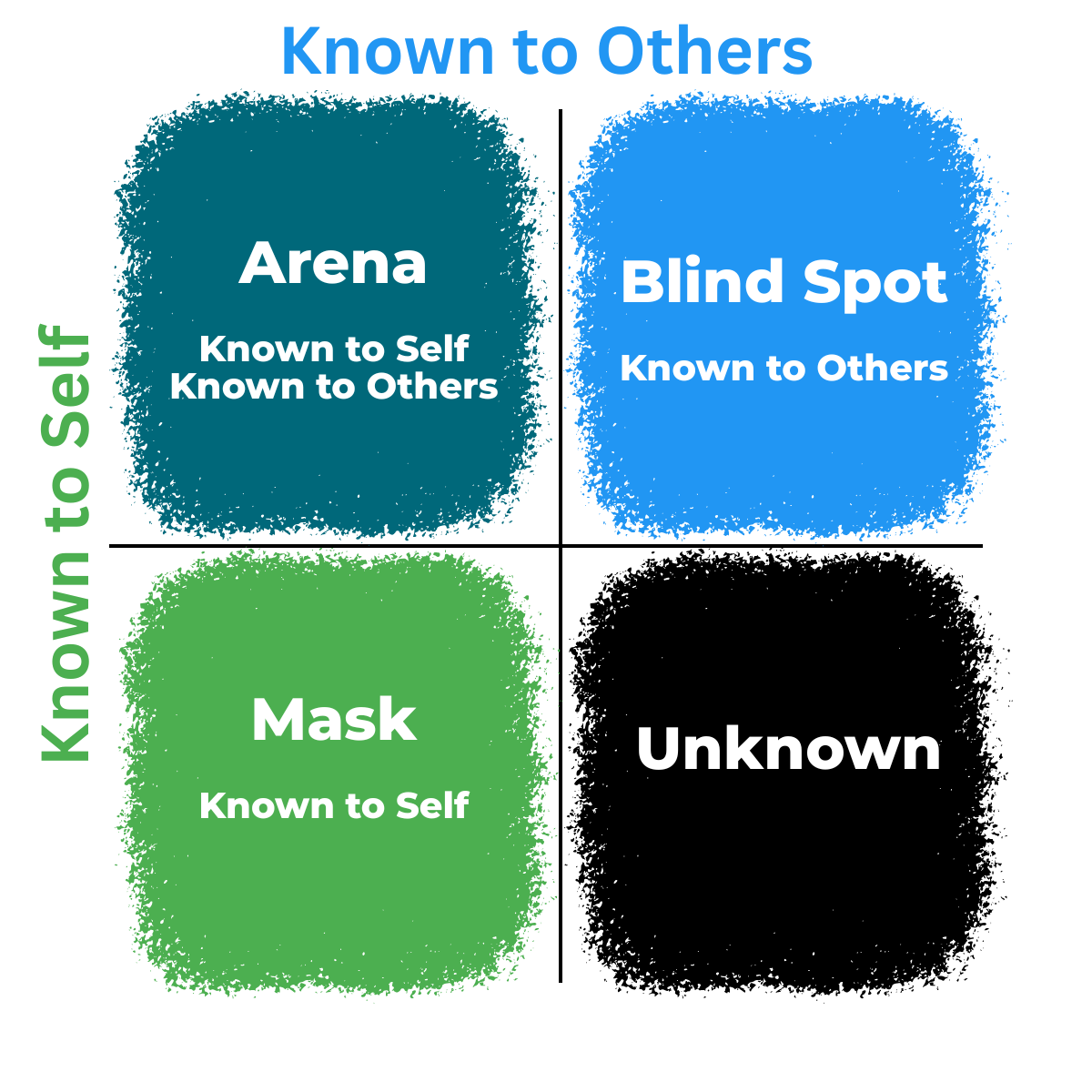
The Johari Window is a valuable model for understanding the relationship between two people. It is used in interpersonal development and coaching, and can help two people bridge issues in their relationship.
The Johari Window is beneficial for several reasons:
- It offers a structured process for understanding a relationship, which can often be messy and uncertain.
- It offers a non-judgmental way to talk about conflict or any issue within the relationship.
- It can help jump-start the discovery process and promote healing.
It was developed by Joseph Luft and Harrington Ingham in 1955. The term ‘Johari’ is a combination of Joseph’s and Harrington’s names.
There are four “panes” in the Johari Window:
- The Arena
- The Blind-spot
- The Mask
- The Unknown
When using the model, participants will determine the size of each ‘window’ to determine how much information is contained in each section. The larger the window, the more information a person has for each pane. The smaller the area, the more information is needed.
The Arena (Known to Self & Known to Others)
The arena represents information that two individuals know about each other. The arena = shared knowledge. It combines what others know and what you know about yourself.
The ultimate goal of the Johari Window is expand the arena. The more we know about each other, the more trust and understanding we will have.
You might find this section also called:
- Open Area
- Open Self
- Free Area.
In the early stages of a relationship, the arena is very small because you don’t know a person very well.
As relationships age, the size of the arena can also show strong correlations with the level of trust in the relationship. However, just because a relationship has been established for a while, it doesn’t mean the arena is large.
A good Johari Window example is in the book The Five Dysfunctions of a Team, the term vulnerability-based trust is used to distinguish it from a mutual understanding of someone’s behavior that we may often call ‘trust’.
You might say you ‘trust’ your manager or co-worker because you know how they would typically respond in any given situation, but would you allow yourself to feel vulnerable around them?
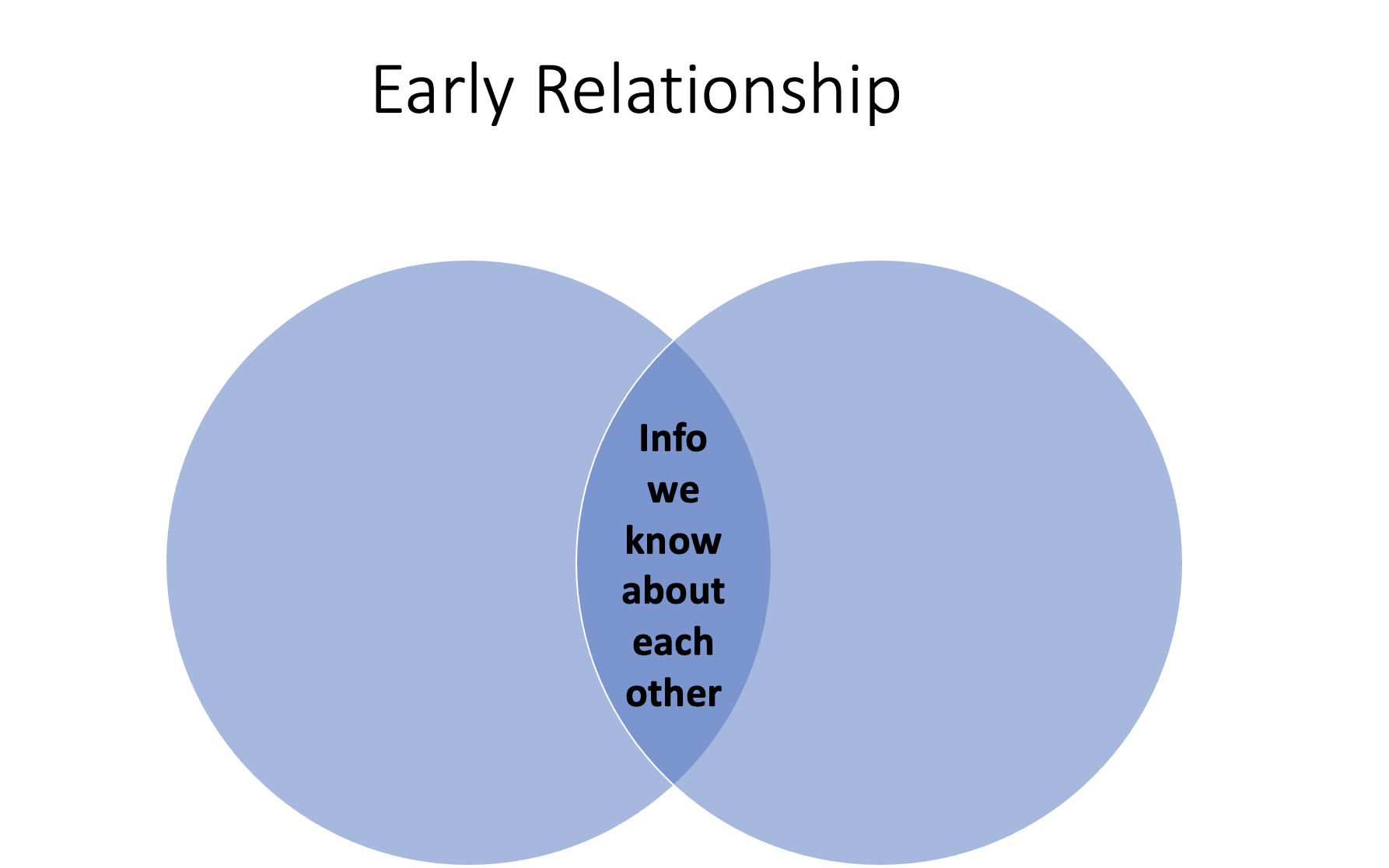
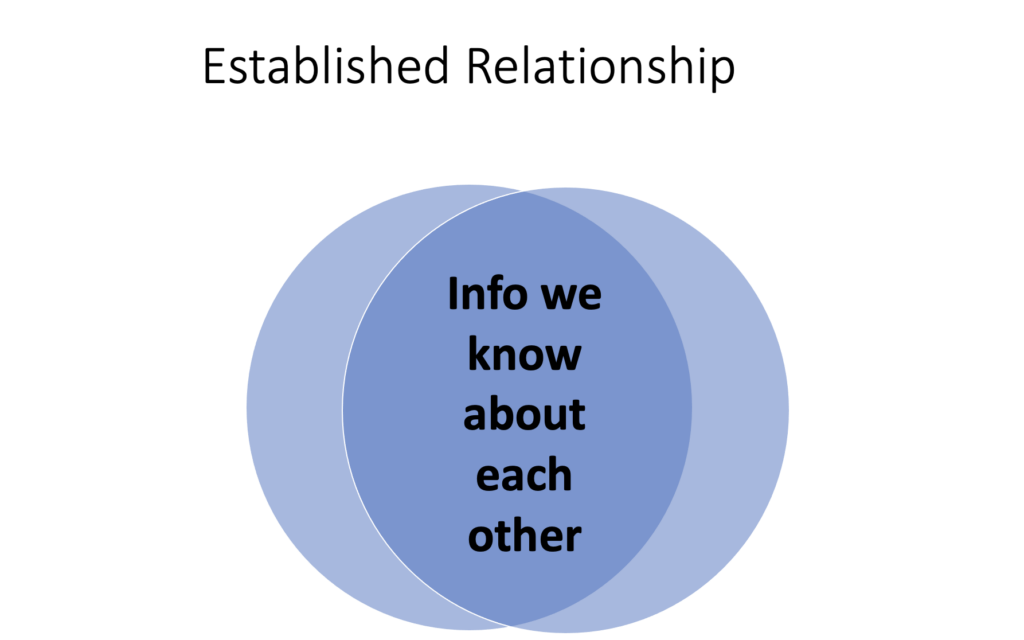
Understanding the size of the arena you share with another person can be an eye-opening experience—people we thought we knew can still surprise us. It might make us realize the arena might be smaller than we initially thought.
In fact, even if an arena is large, there is always room for it to grow, since we are constantly rediscovering and creating our identity as we age and gain more experience. It’s essential to allow the arena to grow within all the relationships you want to keep in your life, rather than settling on a perspective that you ‘know’ someone.
Benefits of Expanding the Arena
Imagine if you were forced to spend a whole weekend alone with someone who irritated you or who you despised.
Now, imagine if, for the whole weekend, you were forced to share a ride on a camel with them.
This is an actual activity that an organization called Seeds of Peace offers to help bridge divides between Israeli and Palestinian youths.

Seeds of Peace expands the Arena of relationships between Palestinians and Israelis by putting them in situations (riding a camel through the desert) where they learn more about each other.
The goal of the program is to help the two divided groups recognize they likely share more in common than they might realize.
This is the goal of the Johari Window and of expanding the arena. When we expand our knowledge of each other, we can start to build trust. When trust exists, communication becomes easier and issues are easier to overcome.
The Blind-Spot
The Blind-spot quadrant is best understood by visualizing yourself driving a car down the highway.
As you are driving, individuals driving behind you have a better view of your decision if you should merge into another lane. They can see your situation from a different angle.
This quadrant contains information that others can see that you might have missed, and it is particularly interesting as we discuss DISC and our own behaviors.
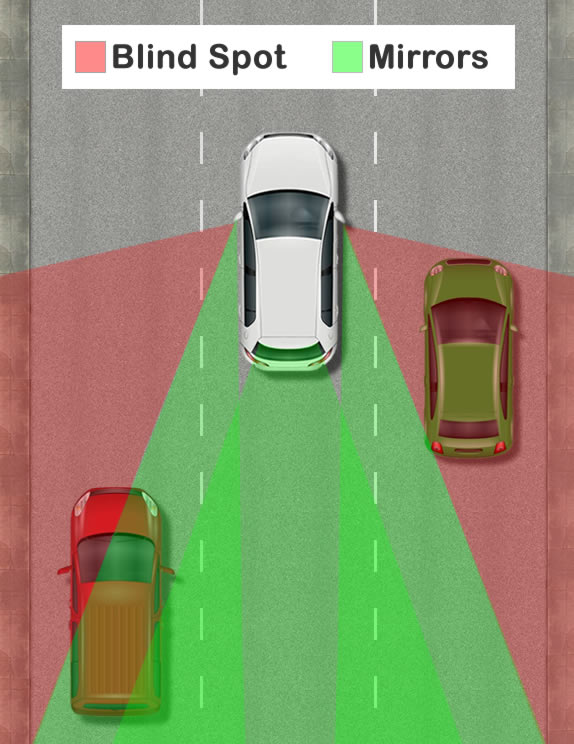
We often get a lot of information about our blind spots without going through the Johari window exercise.
As an example, one of my direct reports was working on a project with an external stakeholder. They cc’d me on an email about a subject we just discussed. I often request to be included only in emails where there is an expectation that I should contribute to the conversation. I responded to the email and emphasised a point that had already been made, assuming I was providing the support my direct report needed.
I was wrong – they felt I overstepped in my communication.
The situation offered an opportunity for us to understand our needs better and clarify how we can support each other in this work relationship. I walked away recognizing that my ‘need’ to offer support could come across as micromanaging, which is the last way I want someone who works for me to feel.
While we didn’t go through the Johari window exercise, we both could have filled out this square with what we learned because of the situation that occurred.
Benefits of Learning Your Blind Spots
We all have blind spots.
Without consulting others, we might continue making decisions that limit our lives. In professional settings, we can use processes such as 360-degree feedback to collect feedback on harmful and helpful behaviors at work.
There are many benefits to uncovering your blind spots, but you can only discover them if you are open to honest feedback. Using tools like the Johari window can be helpful so long as you aren’t dismissive or defensive when someone is trying to give you feedback about your behavior or decisions.
The Mask
The Mask quadrant is information that we keep secret from others.
It’s important to note that the decision to withhold information doesn’t have to be conscious. Often, this quadrant is larger due to insecurities, social norms, or cultural factors.
A real-life example of this took place between 2008 and 2015, when engineers at Volkswagen regularly hid the true emission ratings of its vehicles because they didn’t meet regulatory requirements. Engineers were pressured to meet standards within a timeframe that wasn’t possible with their current engines. Instead of sharing this feedback, they hid it and developed software to bypass the regulatory tests.

It’s essential to recognize that you can only dive into this quadrant if you have established a foundation of trust.
In the case of Volkswagen, because they never had a chance to develop this arena, the organization was hit with billions of dollars in lawsuits, a drop in share price, and loss of consumer trust.
Being vulnerable with others can help. When someone shares information that makes them vulnerable, others are likely to open up about themselves. This can help you or others unmask themselves.
Benefits of Revealing Your Masks
The idea of sharing information about our thoughts, feelings, or perspectives might be difficult, but research shows that we, as the speakers, gain significant benefits from the process.
Researchers from Israel found that a good listener can help us improve self-awareness and clarity. When we open ourselves up to sharing more moments about our lives, we actually gain a better understanding of ourselves and our place in the world around us.
The Unknown
The Unknown quadrant represents information that neither of us knows about ourselves or each other.
Trainers, coaches, and teachers work hard to shine light into this window through shared discovery. For example, Quinta Brunson’s hit show, Abbott Elementary, was named after her 6th-grade teacher, Joyce Abbott. Abbott remarked that Brunson was quiet and shy, but she started blossom. Abbott isn’t surprised that Brunson is an acclaimed writer and actor.
Many individuals who become public speakers don’t seek out this career. Individuals who are believed to be shy and introverted might only learn about their public speaking skills when they try it. Everyone present for that moment now has a better understanding of the person who they thought was only shy and introverted.
In the book & movie The Lord of the Rings, Frodo Baggins has no idea that he has the ability to fight trolls, negotiate with elves or save Middle Earth! While this example might be extreme, we shouldn’t discount what we don’t know about ourselves and what we know about others.
Remaining open to the future has many benefits, and it’s one of the reasons why the unknown is a central piece to the Johari Window model.
Benefits of going into the 'unknown'
We often associate the ‘unknown’ with negativity. Whether it’s a dark forest, unusual sound, or an unknown ‘monster’, we are to avoid the unknown at all costs.
The Unknown in the Johari Window theory doesn’t just mean ‘negative.’ It encompasses any and all experiences or ideas, and researchers are only starting to uncover the wisdom behind the Unknown section of the Johari Window Concept. Studies have recently shown that we experience greater well-being when we experience a wider range of emotions.
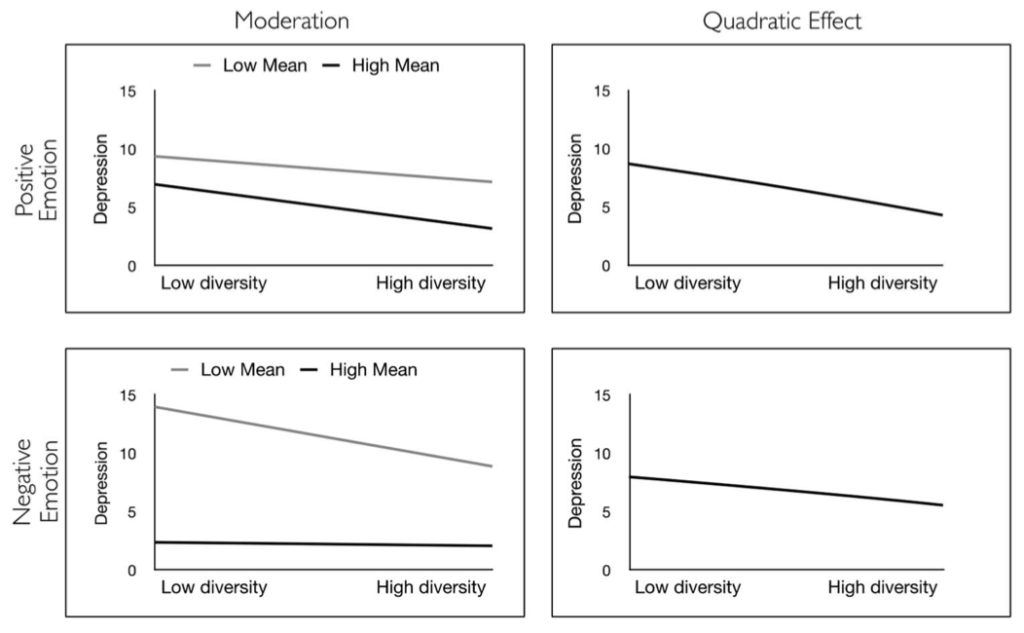
Seeking new experiences can cause frustration, anger, hurt, and other ‘negative’ emotions. It can also bring surprise, excitement, joy, and laughter. Having varied experiences bring new life to our relationships. It’s important to keep looking for ways to expand our relationship’s arena by tapping into the unknown and experiencing something that is entirely new.
Using the Johari Window
The goal of the Johari Window is to increase the arena in any relationship. With a larger arena, there is more trust and understanding.
Here is a step-by-step guide for how to use the Johari Window to accomplish this:
- Take out a sheet of paper and at the top of the paper, list your name and the name of someone else.
- You will start in the Arena quadrant. This is the first of the four quadrants, and you will place it in the top left-hand corner of your paper. Think about and list information that you both know about each other. These could be shared experiences (e.g., worked at the same job, went to the same school) or similar ones (e.g., have kids).
- Below the arena, label the next quadrant the ‘Mask’. Think about any information that you are hiding (either consciously or unconsciously) from the other person. Write down as many things as you can think of.
- Finally, you are at a point where you can label the last two quadrants. In the top right-hand corner of your paper, write ‘Blindspot’. This is an area where they know something about you that you may not recognize. Leave this section blank.
- The last quadrant, in the bottom right-hand corner, is the unknown. This is information that you both don’t know about yourselves or each other. Leave this section blank.
- At this point, it’s time to share what you’ve written with the person. The goal of this exercise is to broaden the arena, so here is how you can start this process:
- Share what you believe you both know about each other.
- Ask them if there is anything they feel is missing that you both know about each other.
- OPTIONAL: If you are feeling brave,
- Share what you wrote under the Mask/Facade section. This could be deeper feelings about decisions you’ve made, or more information in stories you initially left out.
- Ask the person for feedback on specific situations or past events.
The goal of expanding the arena with another person can be challenging. To accomplish it, find ways to be vulnerable. This will help extend the conversation and allow your partner to feel they can be open with you, too.
Here are ways that you can use this activity:
- Workplace Communication
When two people are having trouble communicating, there may be barriers in their relationship. By using the Johari Window, they can review the shared parts of the relationship and discover gaps in perception. This will help how they talk to each other.
- Coaching and leadership
Many leaders struggle with certain relationships. Whether it’s a direct report, another leader, or a leader’s boss, a coach can use this exercise to help the leader expand their view of someone else. This exercise can help someone feel more empathetic towards another person when they initially felt cold or distant.
- Conflict resolution
Conflict often starts because of misperceptions or miscommunication. The Johari Window can bring two sides together by focusing on shared experiences first and then helping others open up by being vulnerable with each other. This is a recipe for helping two people overcome conflict and distrust (if they are willing to work on it!).
- Team building
The best teams are those in which vulnerability-based trust exists. The Johari Window provides a framework for team members to go deeper into their relationships, promoting healthier teams.
Johari Window and DISC Assessment
The Johari Window Model is designed to help two people understand and deepen their relationship by expanding the arena quadrant.
By going through a simple activity of thinking, writing, and talking about a relationship through the Johari Window exercise, you can:
- Resolve interpersonal tension.
- Feel more connected with another person.
- Build more trust with another person.
However, it can be difficult to discuss topics like behaviors, decisions, and stressors.
This is where combining DISC with the Johari Window exercise can be extremely helpful. DISC offers a way to understand behavioral styles in a non-judgmental way. When you complete a DISC assessment, you will learn more about your own personality characteristics. Additionally, you can use the same information to learn more about others.
This information can be beneficial when going through the Johari Window exercise.
DISC and the Arena
One of the most considerable benefits of using DISC during the Johari Window exercise is the ability to understand behavior and stress.
In DISC Training workshops, we see people have a new appreciation for others when they understand the psychological needs behind a person’s DISC Profile. The model captures core insights into ourselves and allows for more immediate recognition and understanding.
Instead of labeling someone as being controlling or domineering. They can ask, “Hey, does your D-Personality type make you want to be more in control of this project?”
Rather than assigning a limiting label to someone, DISC offers insights into why someone might be exhibiting certain behaviors and, most importantly, allows for non-judgmental conversations about behavioral needs.
DISC and the Blind-Spot
Another benefit of using DISC within a Johari Window exercise is that it allows for a more straightforward feedback process.
In one workshop, someone couldn’t hold back their surprise when their colleague with C-Personality Type said they didn’t believe they were skeptical at work.
When the comment was made, the room burst into laughter!
The fact that they were questioning whether they were skeptical was a prime example of their skepticism. As soon as they heard the feedback, they recognized how accurate their report was.
While discussing our personal DISC Profile results, we can shrink the blindspot window by allowing others to provide more details about our personality and behaviors they have seen in us.
DISC and the Mask
Often, the Mask Window is the hardest window to get into.
This window requires trust.
In a past workshop, there was an individual who had a DC/CD Personality Type. By challenging others, they believed that they could be the most effective at their job by ensuring no stone was left unturned. They were hyper-focused on work, leaving little time to talk about anything but the task at hand.
This person was paired with someone who had the I Personality type.
The person with the DC/CD-Personality Style felt that the person with the I-Style avoided work by constantly socializing with everyone in the office.
The person with the I-Style was able to open up and say they felt the individual with the CD/DC style caused unnecessary tension by being hyper-focused on work and not allowing the office to have a sense of casualness throughout the week.
DISC allowed them to unmask themselves to each other by enabling a judgment-free conversation about their feelings for each other..
DISC and the Unknown
Learning the four main DISC styles along with your own DISC style is one way to shrink the unknown quadrant.
We talk about how DISC can shed incredible insights about ourselves and others. This means the DISC Assessment process is helping us make sense of the unknown parts of ourselves and others.
If the DISC Model seems too serious for your organization, you can use other assessment tools like DISC Birds or other assessment-based products to shrink the unknown quadrant of the Johari Window.
How to use the Johari Window during DISC Training
The Johari Window offers a model for understanding and improving any relationship. When combined with DISC, these benefits can be achieved faster or even be compounded. Here are some of the benefits you can realize when combining these two strategies:
- More trust in teams
- better manager and employee relationships
- Better interpersonal communication
To realize these benefits, we suggest taking a first step and learn your DISC Profile by completing our free DISC assessment.
For those who want to leverage these models within their team or organization, join our DISC Certification course and become a certified DISC trainer.
Have a question about using these two models, fill out the form below to connect with a member of our team:
"*" indicates required fields